
Editorial dates are assigned for this collection; they do not represent original publication or author approval dates. The update date records this site revision.
FIELD PERSPECTIVE · 2 MIN READ
Walk the opening before pricing
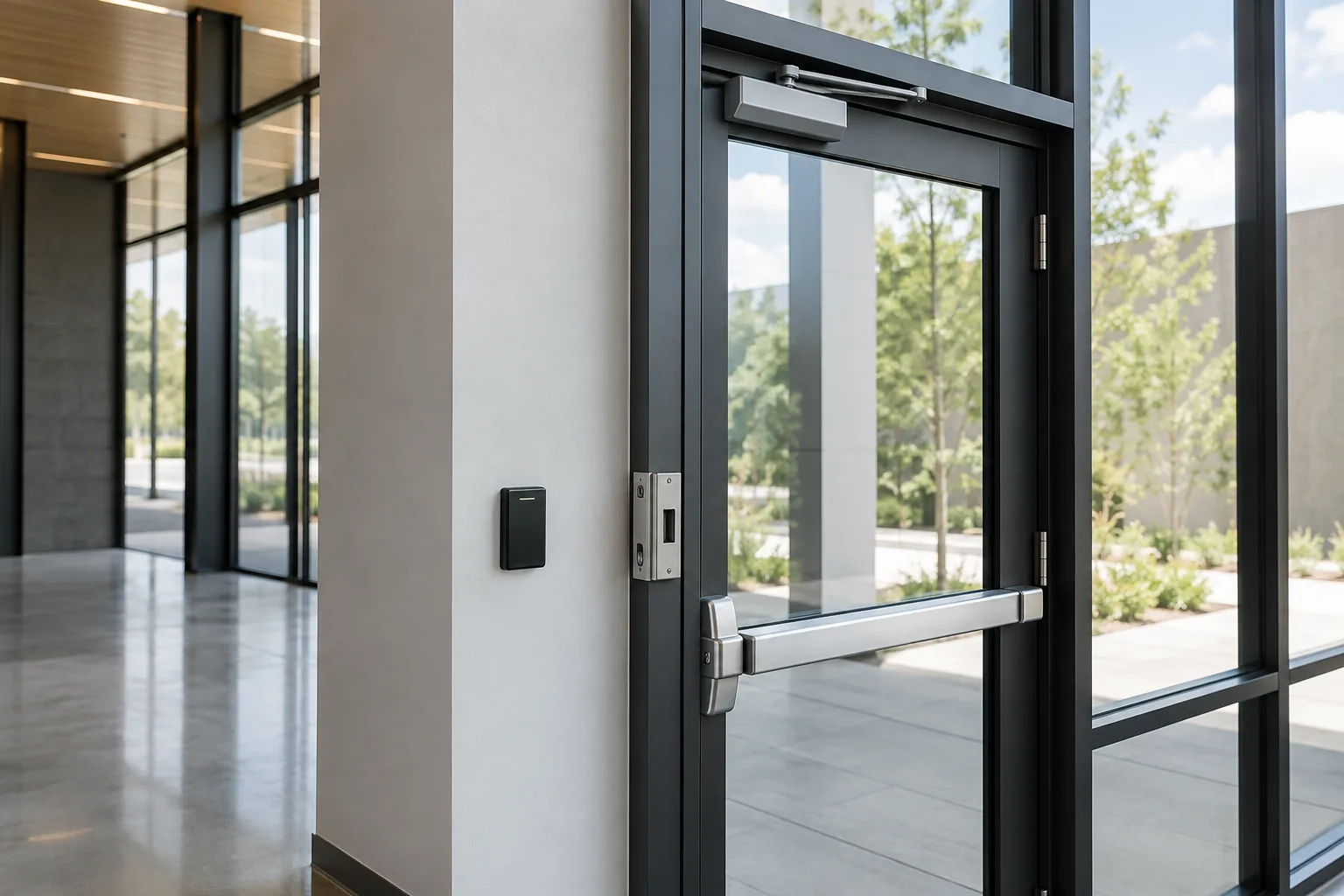
Document the door and frame, latch, closer, exit hardware, power location and intended users. A new reader cannot correct a misaligned strike or a door that fails to close. Different openings may need a hardware specialist, electrician and fire interface review. Mark each existing condition as observed, tested or still unknown.
Separate costs by responsibility
Compare hardware, controller capacity, cabling, local power, credential format, licenses, programming, training and closeout. Note who furnishes a pathway and who repairs a damaged frame. A lower device price can hide an expensive responsibility gap when a tenant or contractor needs access on opening day.
Design for normal and exceptional use
Specify the daily schedule, visitor procedure, accessibility, after-hours access and lost credential process. Then discuss power and network interruptions and required exit behavior with qualified parties. A door that works for a badge during a demo may still fail its physical latch or prescribed emergency sequence.
Approve a door-level acceptance record
For each opening, record its ID, hardware schedule, controller and power source, authorized roles, observed entry and exit, alarm behavior and open exceptions. Price comparison becomes meaningful when bidders can describe the same completed condition and the owner knows which tests will prove it.
Working example: The scenario below is illustrative. It describes a practical design and review method, not a completed customer project or a guaranteed result.
A working scenario
An owner receives three proposals for an entrance; one excludes the closer and power supply, so the reader price is misleading.
The decision to make before buying
Ask bidders to identify hardware, power, cable, licenses, trades and commissioning for each opening.
A useful acceptance test
Test entry, denial, latching, exit, outage and restoration under the approved plan.
What the owner should receive
Retain opening schedule, wiring references, tested behavior, exceptions and responsibility matrix.
Questions owners ask
What should a controlled door estimate itemize?
The opening, field wiring, local power, lock or strike, exit and position devices, controller capacity, credentials, software, programming and testing. Ask which existing parts have actually been tested and which trade owns the work.
Can the reader be replaced without examining the door?
Only after the team verifies the symptom and interfaces. An access-granted event says the controller made a decision; it does not prove the lock moved or the latch held.
Project conditions and responsibilities vary. Confirm the actual scope and test plan with the owner and project team.