Audience and zones
Identify who needs an instruction, where they are likely to be, and which channels can reach them during the event.

Deliver clear instructions to the right people through appropriate communication channels.
Greater Denver and the Front Range
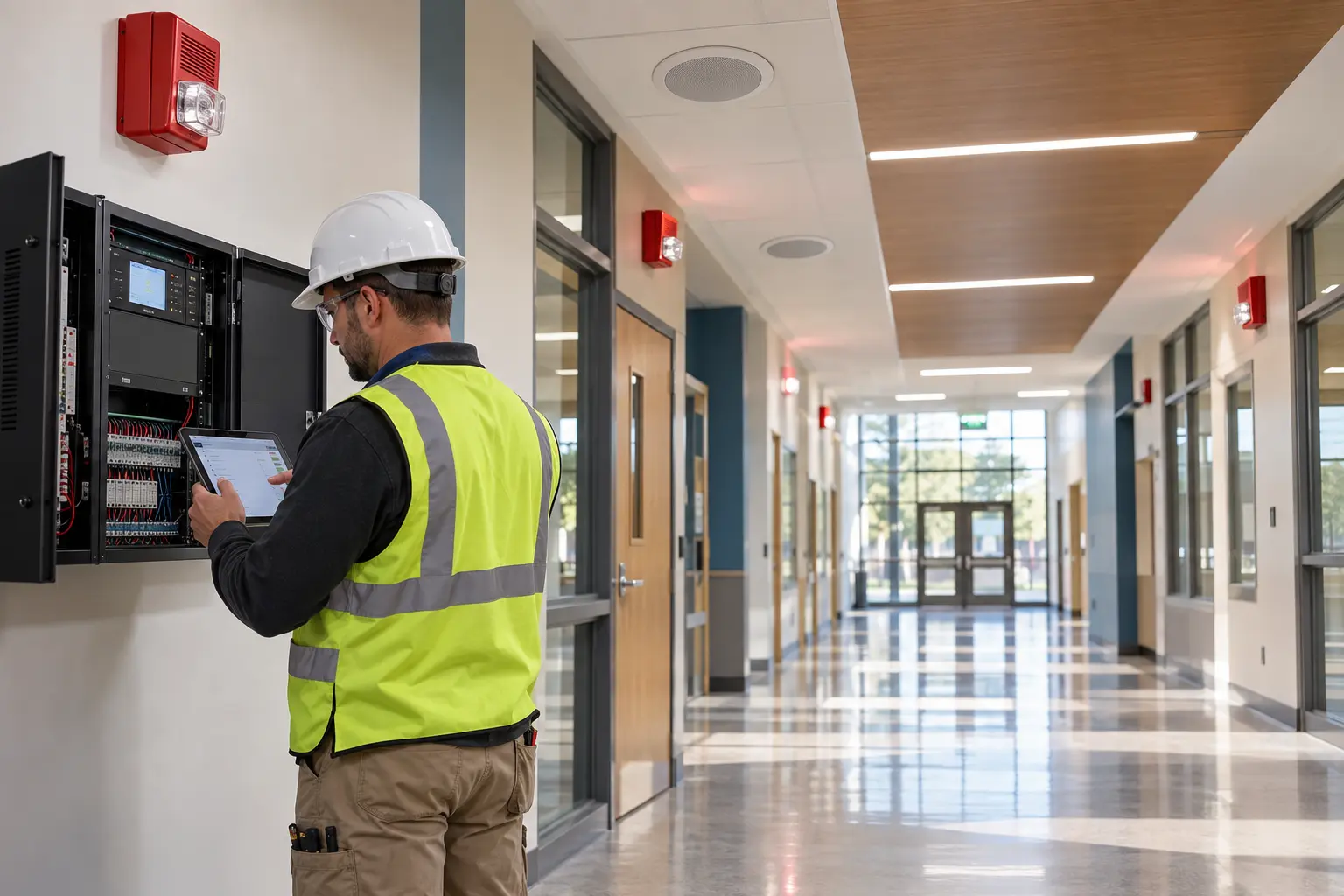
Products, interfaces and exact scope are confirmed after reviewing the facility.
A useful design specifies who can initiate a message, what triggers it and how it interacts with fire alarm or security events.
Plan zones and messages with the emergency team. Decide which channels are authoritative, who may activate each scenario and how a message is updated or canceled; rehearse the human workflow, not only the equipment.
Practice approved scenarios and maintain message content, contact data and operator training.
We confirm existing conditions and customer responsibilities before finalizing products, interfaces, tests and the documentation needed to support the installed system.
A useful design connects components, people, failure conditions and a testable handoff.
Identify who needs an instruction, where they are likely to be, and which channels can reach them during the event.
Define manual and automated triggers, message approval, priority over routine paging and the backup if a channel fails.
Write actionable messages, verify intelligibility or delivery at representative locations, and prevent conflicting alerts from different systems.
Train authorized initiators, practice representative scenarios and keep contact groups, zone maps and templates current.
Five possible applications to explore during discovery. These describe capabilities and design scenarios, not completed customer projects.
Deliver a distinct message to the affected floors of a multi-building campus.
Coordinate indoor speakers and outdoor areas where audibility changes with background noise.
Define who may issue an emergency message and who approves message templates.
Test network, power and fallback paths for time-critical alerts.
Train operators on acknowledgement, escalation and all-clear procedures.
Our pre-site safety review, field documentation and customer acceptance process help keep the installed condition visible to the people who will operate and maintain it. For mass notification, the closeout conversation should include: Train authorized initiators, practice representative scenarios and keep contact groups, zone maps and templates current.
We ask for the existing drawings, device inventory, network and power ownership, known deficiencies and the people who will use the system. The final scope and acceptance criteria follow those answers.
| Decision | What to confirm |
|---|---|
| Scope | Confirm the devices, areas and operating modes included in the work; record exclusions. |
| Dependencies | Plan zones and messages with the emergency team. Decide which channels are authoritative, who may activate each scenario and how a message is updated or canceled; rehearse the human workflow, not only the equipment. |
| Handoff evidence | Train authorized initiators, practice representative scenarios and keep contact groups, zone maps and templates current. |
Have a building in Colorado? 1st Key stands ready and able to help. Tell us the location and what needs attention; we will confirm service availability and scope.
Describe the facility, the existing equipment and the outcome you need. We can discuss design, deployment or service.