Greater Denver & the Front RangeDenver & Front Range(720) 340-1539
1st Key Technology Group — One Integrator, Every System
INDUSTRY / PLACES PEOPLE GATHER

Security, AV and communications for houses of worship.

Open, welcoming facilities still need clear plans for children’s spaces, events and emergencies.

Greater Denver and the Front Range

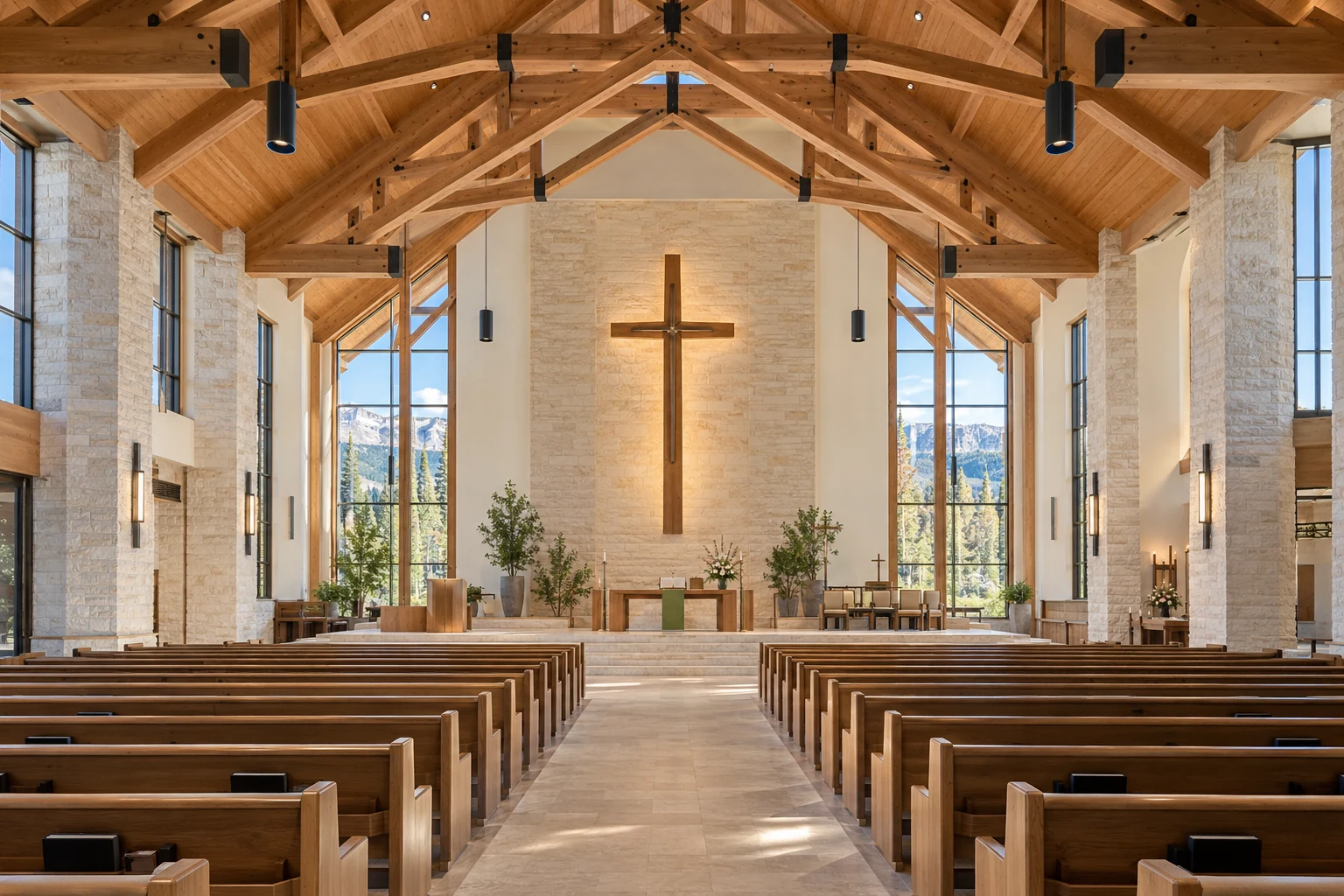
Modern church sanctuary with timber beams, seating and a prominent cross

At a glance

  • Welcoming access
  • Children’s check-in
  • Service AV
  • Emergency communication

System scope follows the facility’s operating needs and assessment.

THE OPERATING CONTEXT

Operating priorities for houses of worship

System choices should start with the occupants, access patterns, daily operations and the team responsible for responding to an alert. The scope then connects those requirements to practical equipment, documentation and service.

OPERATIONAL VALUE

Where integrated systems ease the work

These examples are design opportunities to validate with each facility, not promised results from a specific project.

THE FRICTION

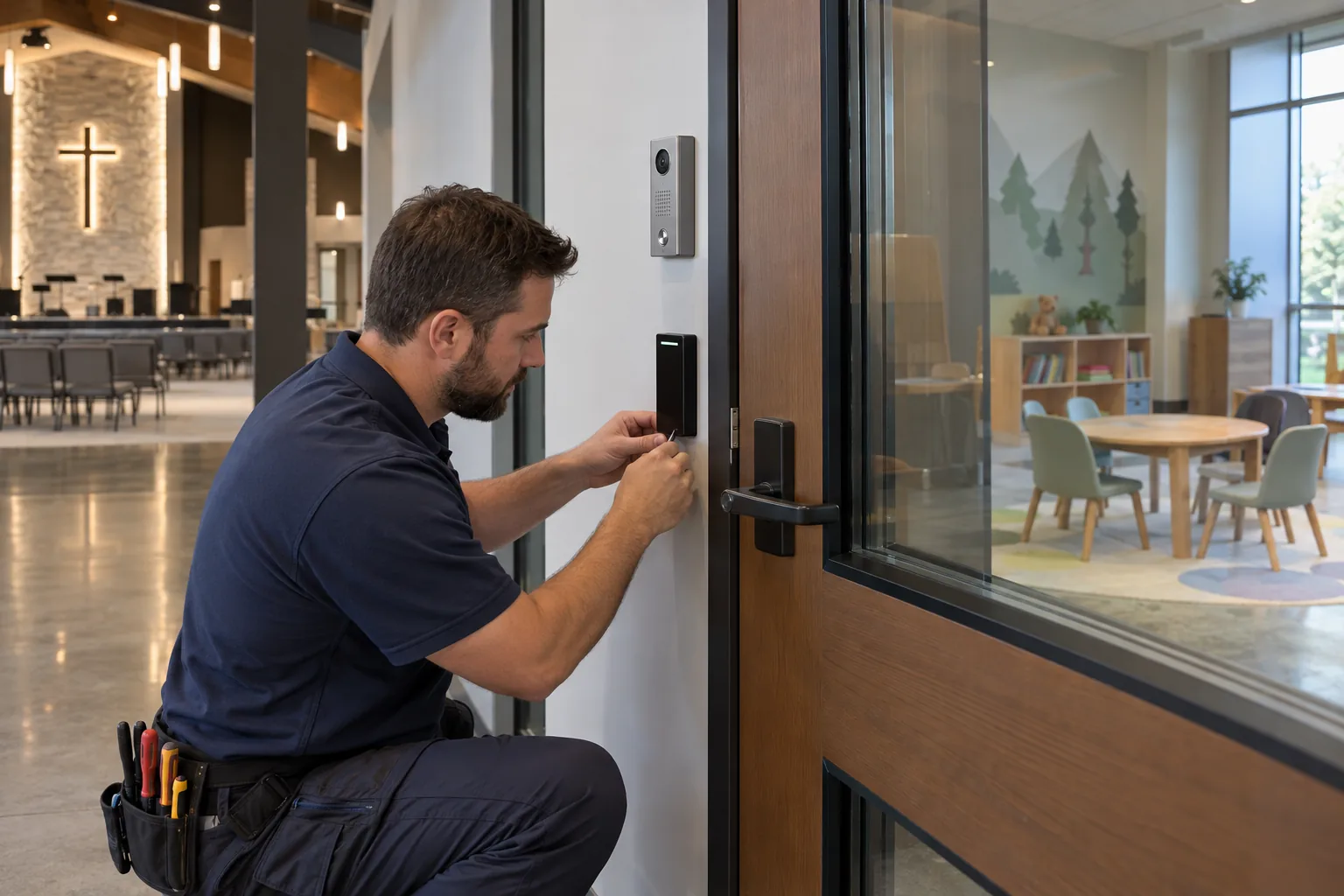
The building must welcome visitors while protecting children’s rooms.

THE RESPONSE

Separate public arrival from staff and children’s areas with adaptable door schedules.

THE PRACTICAL VALUE

The community remains open while leaders can manage sensitive areas deliberately.
THE FRICTION

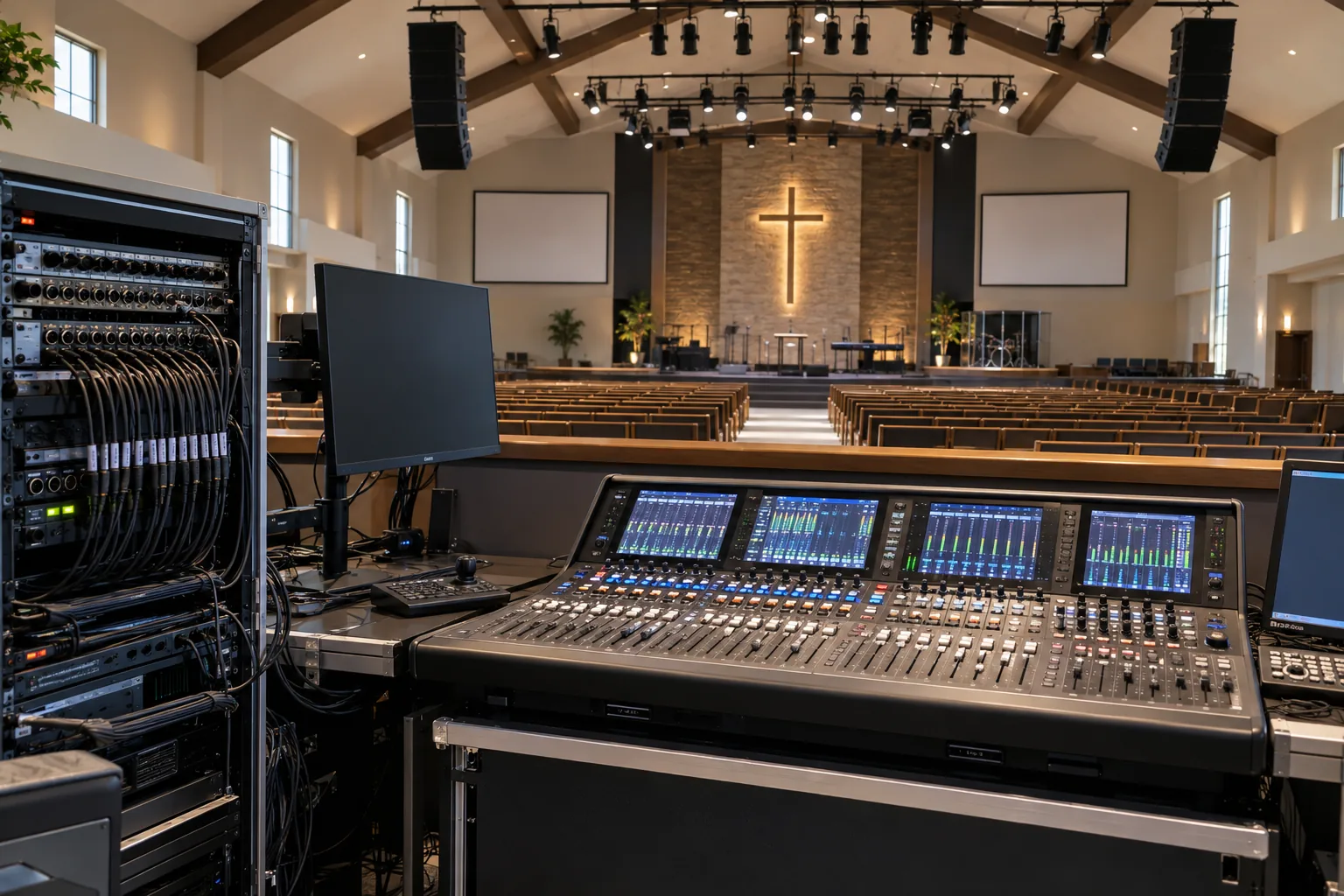
Volunteer operators rotate often.

THE RESPONSE

Simplify AV controls, paging zones and documented training.

THE PRACTICAL VALUE

A new operator can run a service without depending on one expert.

THE FRICTION

Weekday and event use have different response patterns.

THE RESPONSE

Create scenario-based alerts and contacts for both modes.

THE PRACTICAL VALUE

Staff know whom to call and what message to send when a situation changes.

A CONNECTED SOLUTION

Capabilities to consider

The right mix depends on the site assessment and its existing systems.

Planning scenarios for houses of worshipOpen for supporting detail

COLORADO APPLICATION SCENARIOS

Ten practical examples for houses of worship.

These are modeled planning scenarios written in retrospective form to show how a complex project could have been approached and accepted. They are not completed 1st Key customer projects or measured outcomes. The cities, building sizes and results are hypothetical; actual scope and performance depend on the facility.

PLANNING EXAMPLE 01Centennial, Colorado · 12,000 sq ft

Define open-hours and closed-hours access for volunteers and staff

Customer situation · New construction

In this modeled Centennial scenario, a 12,000-square-foot houses of worship facility had reached a decision point: the design team had to settle device locations, power, pathways and system ownership before finishes closed. Volunteers operated the building differently for services, weekdays and special events. The owner had to keep ordinary operations moving while determining which portions of the installed environment were trustworthy. A change after close-in would have affected other trades, schedule and cost, so the acceptance method had to be agreed before procurement.

Customer pain point

The operational problem was specific: volunteer keys circulate long after event assignments change. Welcoming arrival and protected children’s spaces had to coexist with safe egress. Staff could not reliably tell whether a missed event came from a field device, a network path, an outdated rule or an incomplete handoff. The owner also lacked a single acceptance record that connected the symptom to a test, the person responsible and a closeout decision.

Goal & 1st Key approach

The modeled goal was to define open-hours and closed-hours access for volunteers and staff without creating a second, disconnected operating burden. The proposed 1st Key team had mapped users, hours, legacy equipment and dependencies with property, security and IT contacts. The opening-level review covered the credential rule, door hardware, power, egress, held or forced events and what an operator would see when a test failed. The design had staged an owner-approved work window, a test plan for normal and failure conditions, and a named person to resolve exceptions before the next phase.

Outcome & acceptance evidence

In the modeled result, simpler volunteer operation without making the facility feel closed. The acceptance test had been defined around this observable result: a volunteer profile works for its approved event window and cannot enter restricted staff areas. The closeout package would have included the event-day walkthrough, volunteer guide and authorized-user test, a list of unresolved conditions with owners and dates, and training for the person who would administer or respond to the system. This described impact is a planning illustration, not a measured result from a completed 1st Key customer project.

PLANNING EXAMPLE 02Boulder, Colorado · 28,000 sq ft

Give a childcare area a controlled entry path and clear visitor check-in

Customer situation · Modernization

In this modeled Boulder scenario, a 28,000-square-foot houses of worship facility had reached a decision point: the occupied building had legacy hardware, incomplete records and users who could not simply be shut out during the migration. Volunteers operated the building differently for services, weekdays and special events. The owner had to keep ordinary operations moving while determining which portions of the installed environment were trustworthy. The team needed a baseline, phased work windows and an explicit rollback point before any cutover.

Customer pain point

The operational problem was specific: childcare arrivals mix with general visitors during busy services. Welcoming arrival and protected children’s spaces had to coexist with safe egress. Staff could not reliably tell whether a missed event came from a field device, a network path, an outdated rule or an incomplete handoff. The owner also lacked a single acceptance record that connected the symptom to a test, the person responsible and a closeout decision.

Goal & 1st Key approach

The modeled goal was to give a childcare area a controlled entry path and clear visitor check-in without creating a second, disconnected operating burden. The proposed 1st Key team had mapped users, hours, legacy equipment and dependencies with property, security and IT contacts. The opening-level review covered the credential rule, door hardware, power, egress, held or forced events and what an operator would see when a test failed. The design had staged an owner-approved work window, a test plan for normal and failure conditions, and a named person to resolve exceptions before the next phase.

Outcome & acceptance evidence

In the modeled result, simpler volunteer operation without making the facility feel closed. The acceptance test had been defined around this observable result: a supervised walkthrough demonstrates the approved check-in and controlled-entry process without compromising egress. The closeout package would have included the event-day walkthrough, volunteer guide and authorized-user test, a list of unresolved conditions with owners and dates, and training for the person who would administer or respond to the system. This described impact is a planning illustration, not a measured result from a completed 1st Key customer project.

PLANNING EXAMPLE 03Greeley, Colorado · 65,000 sq ft

Review entry camera coverage during a large event

Customer situation · Add-on

In this modeled Greeley scenario, a 65,000-square-foot houses of worship facility had reached a decision point: the owner had an installed system that still served part of the property, but the new area changed capacity, licensing or administration. Volunteers operated the building differently for services, weekdays and special events. The owner had to keep ordinary operations moving while determining which portions of the installed environment were trustworthy. A successful addition depended on checking compatibility and avoiding a new isolated workflow.

Customer pain point

The operational problem was specific: a large gathering creates entry blind spots and uncertainty for volunteer security staff. Welcoming arrival and protected children’s spaces had to coexist with safe egress. Staff could not reliably tell whether a missed event came from a field device, a network path, an outdated rule or an incomplete handoff. The owner also lacked a single acceptance record that connected the symptom to a test, the person responsible and a closeout decision.

Goal & 1st Key approach

The modeled goal was to review entry camera coverage during a large event without creating a second, disconnected operating burden. The proposed 1st Key team had mapped users, hours, legacy equipment and dependencies with property, security and IT contacts. The opening-level review covered the credential rule, door hardware, power, egress, held or forced events and what an operator would see when a test failed. The design had staged an owner-approved work window, a test plan for normal and failure conditions, and a named person to resolve exceptions before the next phase.

Outcome & acceptance evidence

In the modeled result, simpler volunteer operation without making the facility feel closed. The acceptance test had been defined around this observable result: a peak-arrival scenario verifies the agreed entrance views and where operators should look first. The closeout package would have included the event-day walkthrough, volunteer guide and authorized-user test, a list of unresolved conditions with owners and dates, and training for the person who would administer or respond to the system. This described impact is a planning illustration, not a measured result from a completed 1st Key customer project.

PLANNING EXAMPLE 04Longmont, Colorado · 8,000 sq ft

Create a discreet duress workflow for a reception desk

Customer situation · Replace existing provider

In this modeled Longmont scenario, a 8,000-square-foot houses of worship facility had reached a decision point: the owner had to separate recoverable assets from undocumented settings, unsupported products and access held by the previous provider. Volunteers operated the building differently for services, weekdays and special events. The owner had to keep ordinary operations moving while determining which portions of the installed environment were trustworthy. A takeover would have required administrator transfer, a tested baseline and a clear list of inherited deficiencies.

Customer pain point

The operational problem was specific: reception volunteers need a discreet way to request assistance. Welcoming arrival and protected children’s spaces had to coexist with safe egress. Staff could not reliably tell whether a missed event came from a field device, a network path, an outdated rule or an incomplete handoff. The owner also lacked a single acceptance record that connected the symptom to a test, the person responsible and a closeout decision.

Goal & 1st Key approach

The modeled goal was to create a discreet duress workflow for a reception desk without creating a second, disconnected operating burden. The proposed 1st Key team had mapped users, hours, legacy equipment and dependencies with property, security and IT contacts. The event review checked device location, signal path, backup condition, recipient, acknowledgment and the action expected after a real alarm. The design had staged an owner-approved work window, a test plan for normal and failure conditions, and a named person to resolve exceptions before the next phase.

Outcome & acceptance evidence

In the modeled result, simpler volunteer operation without making the facility feel closed. The acceptance test had been defined around this observable result: an authorized duress test reaches the designated responders with the correct location and response instructions. The closeout package would have included the event-day walkthrough, volunteer guide and authorized-user test, a list of unresolved conditions with owners and dates, and training for the person who would administer or respond to the system. This described impact is a planning illustration, not a measured result from a completed 1st Key customer project.

PLANNING EXAMPLE 05Loveland, Colorado · 35,000 sq ft

Make announcements intelligible in the sanctuary and adjacent rooms

Customer situation · New construction

In this modeled Loveland scenario, a 35,000-square-foot houses of worship facility had reached a decision point: the design team had to settle device locations, power, pathways and system ownership before finishes closed. Volunteers operated the building differently for services, weekdays and special events. The owner had to keep ordinary operations moving while determining which portions of the installed environment were trustworthy. A change after close-in would have affected other trades, schedule and cost, so the acceptance method had to be agreed before procurement.

Customer pain point

The operational problem was specific: speech is difficult to understand in overflow and adjacent rooms. Welcoming arrival and protected children’s spaces had to coexist with safe egress. Staff could not reliably tell whether a missed event came from a field device, a network path, an outdated rule or an incomplete handoff. The owner also lacked a single acceptance record that connected the symptom to a test, the person responsible and a closeout decision.

Goal & 1st Key approach

The modeled goal was to make announcements intelligible in the sanctuary and adjacent rooms without creating a second, disconnected operating burden. The proposed 1st Key team had mapped users, hours, legacy equipment and dependencies with property, security and IT contacts. The technical review checked power, network, location, operator permissions, failure behavior and who would support the resulting system. The design had staged an owner-approved work window, a test plan for normal and failure conditions, and a named person to resolve exceptions before the next phase.

Outcome & acceptance evidence

In the modeled result, simpler volunteer operation without making the facility feel closed. The acceptance test had been defined around this observable result: a listening walkthrough confirms intelligibility in the agreed zones and identifies any remaining acoustic limitations. The closeout package would have included the event-day walkthrough, volunteer guide and authorized-user test, a list of unresolved conditions with owners and dates, and training for the person who would administer or respond to the system. This described impact is a planning illustration, not a measured result from a completed 1st Key customer project.

PLANNING EXAMPLE 06Broomfield, Colorado · 18,000 sq ft

Equip hybrid events with microphones, cameras and simple operator controls

Customer situation · Modernization

In this modeled Broomfield scenario, a 18,000-square-foot houses of worship facility had reached a decision point: the occupied building had legacy hardware, incomplete records and users who could not simply be shut out during the migration. Volunteers operated the building differently for services, weekdays and special events. The owner had to keep ordinary operations moving while determining which portions of the installed environment were trustworthy. The team needed a baseline, phased work windows and an explicit rollback point before any cutover.

Customer pain point

The operational problem was specific: hybrid services depend on improvised cabling and difficult microphone setup. Welcoming arrival and protected children’s spaces had to coexist with safe egress. Staff could not reliably tell whether a missed event came from a field device, a network path, an outdated rule or an incomplete handoff. The owner also lacked a single acceptance record that connected the symptom to a test, the person responsible and a closeout decision.

Goal & 1st Key approach

The modeled goal was to equip hybrid events with microphones, cameras and simple operator controls without creating a second, disconnected operating burden. The proposed 1st Key team had mapped users, hours, legacy equipment and dependencies with property, security and IT contacts. The view review checked subject size, day and night lighting, clock alignment, storage and whether an authorized user could retrieve the needed recording. The design had staged an owner-approved work window, a test plan for normal and failure conditions, and a named person to resolve exceptions before the next phase.

Outcome & acceptance evidence

In the modeled result, simpler volunteer operation without making the facility feel closed. The acceptance test had been defined around this observable result: a volunteer can start the agreed camera and microphone configuration using a short operating guide. The closeout package would have included the event-day walkthrough, volunteer guide and authorized-user test, a list of unresolved conditions with owners and dates, and training for the person who would administer or respond to the system. This described impact is a planning illustration, not a measured result from a completed 1st Key customer project.

PLANNING EXAMPLE 07Commerce City, Colorado · 5,000 sq ft

Limit access to offices, storage and donation-handling areas

Customer situation · Add-on

In this modeled Commerce City scenario, a 5,000-square-foot houses of worship facility had reached a decision point: the owner had an installed system that still served part of the property, but the new area changed capacity, licensing or administration. Volunteers operated the building differently for services, weekdays and special events. The owner had to keep ordinary operations moving while determining which portions of the installed environment were trustworthy. A successful addition depended on checking compatibility and avoiding a new isolated workflow.

Customer pain point

The operational problem was specific: shared access exposes donation storage and offices beyond the intended team. Welcoming arrival and protected children’s spaces had to coexist with safe egress. Staff could not reliably tell whether a missed event came from a field device, a network path, an outdated rule or an incomplete handoff. The owner also lacked a single acceptance record that connected the symptom to a test, the person responsible and a closeout decision.

Goal & 1st Key approach

The modeled goal was to limit access to offices, storage and donation-handling areas without creating a second, disconnected operating burden. The proposed 1st Key team had mapped users, hours, legacy equipment and dependencies with property, security and IT contacts. The opening-level review covered the credential rule, door hardware, power, egress, held or forced events and what an operator would see when a test failed. The design had staged an owner-approved work window, a test plan for normal and failure conditions, and a named person to resolve exceptions before the next phase.

Outcome & acceptance evidence

In the modeled result, simpler volunteer operation without making the facility feel closed. The acceptance test had been defined around this observable result: permission tests demonstrate separate public, volunteer and authorized administrative areas. The closeout package would have included the event-day walkthrough, volunteer guide and authorized-user test, a list of unresolved conditions with owners and dates, and training for the person who would administer or respond to the system. This described impact is a planning illustration, not a measured result from a completed 1st Key customer project.

PLANNING EXAMPLE 08Denver, Colorado · 22,000 sq ft

Connect intrusion zones to a documented after-hours call list

Customer situation · Replace existing provider

In this modeled Denver scenario, a 22,000-square-foot houses of worship facility had reached a decision point: the owner had to separate recoverable assets from undocumented settings, unsupported products and access held by the previous provider. Volunteers operated the building differently for services, weekdays and special events. The owner had to keep ordinary operations moving while determining which portions of the installed environment were trustworthy. A takeover would have required administrator transfer, a tested baseline and a clear list of inherited deficiencies.

Customer pain point

The operational problem was specific: false or unexplained after-hours signals cause confused callbacks. Welcoming arrival and protected children’s spaces had to coexist with safe egress. Staff could not reliably tell whether a missed event came from a field device, a network path, an outdated rule or an incomplete handoff. The owner also lacked a single acceptance record that connected the symptom to a test, the person responsible and a closeout decision.

Goal & 1st Key approach

The modeled goal was to connect intrusion zones to a documented after-hours call list without creating a second, disconnected operating burden. The proposed 1st Key team had mapped users, hours, legacy equipment and dependencies with property, security and IT contacts. The event review checked device location, signal path, backup condition, recipient, acknowledgment and the action expected after a real alarm. The design had staged an owner-approved work window, a test plan for normal and failure conditions, and a named person to resolve exceptions before the next phase.

Outcome & acceptance evidence

In the modeled result, simpler volunteer operation without making the facility feel closed. The acceptance test had been defined around this observable result: a zone test confirms the location description, contact sequence and responsible decision-maker. The closeout package would have included the event-day walkthrough, volunteer guide and authorized-user test, a list of unresolved conditions with owners and dates, and training for the person who would administer or respond to the system. This described impact is a planning illustration, not a measured result from a completed 1st Key customer project.

PLANNING EXAMPLE 09Aurora, Colorado · 90,000 sq ft

Plan campus-wide notification for an event without assuming one speaker zone fits all

Customer situation · New construction

In this modeled Aurora scenario, a 90,000-square-foot houses of worship facility had reached a decision point: the design team had to settle device locations, power, pathways and system ownership before finishes closed. Volunteers operated the building differently for services, weekdays and special events. The owner had to keep ordinary operations moving while determining which portions of the installed environment were trustworthy. A change after close-in would have affected other trades, schedule and cost, so the acceptance method had to be agreed before procurement.

Customer pain point

The operational problem was specific: one announcement level is either inaudible outdoors or too loud indoors. Welcoming arrival and protected children’s spaces had to coexist with safe egress. Staff could not reliably tell whether a missed event came from a field device, a network path, an outdated rule or an incomplete handoff. The owner also lacked a single acceptance record that connected the symptom to a test, the person responsible and a closeout decision.

Goal & 1st Key approach

The modeled goal was to plan campus-wide notification for an event without assuming one speaker zone fits all without creating a second, disconnected operating burden. The proposed 1st Key team had mapped users, hours, legacy equipment and dependencies with property, security and IT contacts. The event review checked device location, signal path, backup condition, recipient, acknowledgment and the action expected after a real alarm. The design had staged an owner-approved work window, a test plan for normal and failure conditions, and a named person to resolve exceptions before the next phase.

Outcome & acceptance evidence

In the modeled result, simpler volunteer operation without making the facility feel closed. The acceptance test had been defined around this observable result: a zone-by-zone exercise verifies the selected message routes and operator priority controls. The closeout package would have included the event-day walkthrough, volunteer guide and authorized-user test, a list of unresolved conditions with owners and dates, and training for the person who would administer or respond to the system. This described impact is a planning illustration, not a measured result from a completed 1st Key customer project.

PLANNING EXAMPLE 10Colorado Springs, Colorado · 42,000 sq ft

Document which volunteer or staff member can administer each system

Customer situation · Modernization

In this modeled Colorado Springs scenario, a 42,000-square-foot houses of worship facility had reached a decision point: the occupied building had legacy hardware, incomplete records and users who could not simply be shut out during the migration. Volunteers operated the building differently for services, weekdays and special events. The owner had to keep ordinary operations moving while determining which portions of the installed environment were trustworthy. The team needed a baseline, phased work windows and an explicit rollback point before any cutover.

Customer pain point

The operational problem was specific: system credentials reside with a former volunteer and cannot be located. Welcoming arrival and protected children’s spaces had to coexist with safe egress. Staff could not reliably tell whether a missed event came from a field device, a network path, an outdated rule or an incomplete handoff. The owner also lacked a single acceptance record that connected the symptom to a test, the person responsible and a closeout decision.

Goal & 1st Key approach

The modeled goal was to document which volunteer or staff member can administer each system without creating a second, disconnected operating burden. The proposed 1st Key team had mapped users, hours, legacy equipment and dependencies with property, security and IT contacts. The technical review checked power, network, location, operator permissions, failure behavior and who would support the resulting system. The design had staged an owner-approved work window, a test plan for normal and failure conditions, and a named person to resolve exceptions before the next phase.

Outcome & acceptance evidence

In the modeled result, simpler volunteer operation without making the facility feel closed. The acceptance test had been defined around this observable result: the organization holds approved administrator accounts and a documented succession and revocation procedure. The closeout package would have included the event-day walkthrough, volunteer guide and authorized-user test, a list of unresolved conditions with owners and dates, and training for the person who would administer or respond to the system. This described impact is a planning illustration, not a measured result from a completed 1st Key customer project.

DISCOVERY

Questions worth asking early

Answers to these questions help set the scope before product selection and reduce surprises during installation and handoff.

Have a building in Colorado? 1st Key stands ready and able to help. Tell us the location and what needs attention; we will confirm service availability and scope.

NEXT STEP

Talk about your houses of worship facility

We can start with the current environment, its main risks and the decisions that need to be made.

Request Service
BEFORE YOU BUY

Bring the operating team into the decision.

How does the building change between services and weekdays?

Assign a facility owner to this question. Record the current workflow, desired change, dependencies and the evidence needed for acceptance.

Who operates the systems?

Assign a facility owner to this question. Record the current workflow, desired change, dependencies and the evidence needed for acceptance.

Which doors should stay welcoming?

Assign a facility owner to this question. Record the current workflow, desired change, dependencies and the evidence needed for acceptance.

Prepare your facility brief ↗   Understand the project process ↗

Request Service