Greater Denver & the Front RangeDenver & Front Range(720) 340-1539
1st Key Technology Group — One Integrator, Every System
SAFETY

Field safety and site preparation.

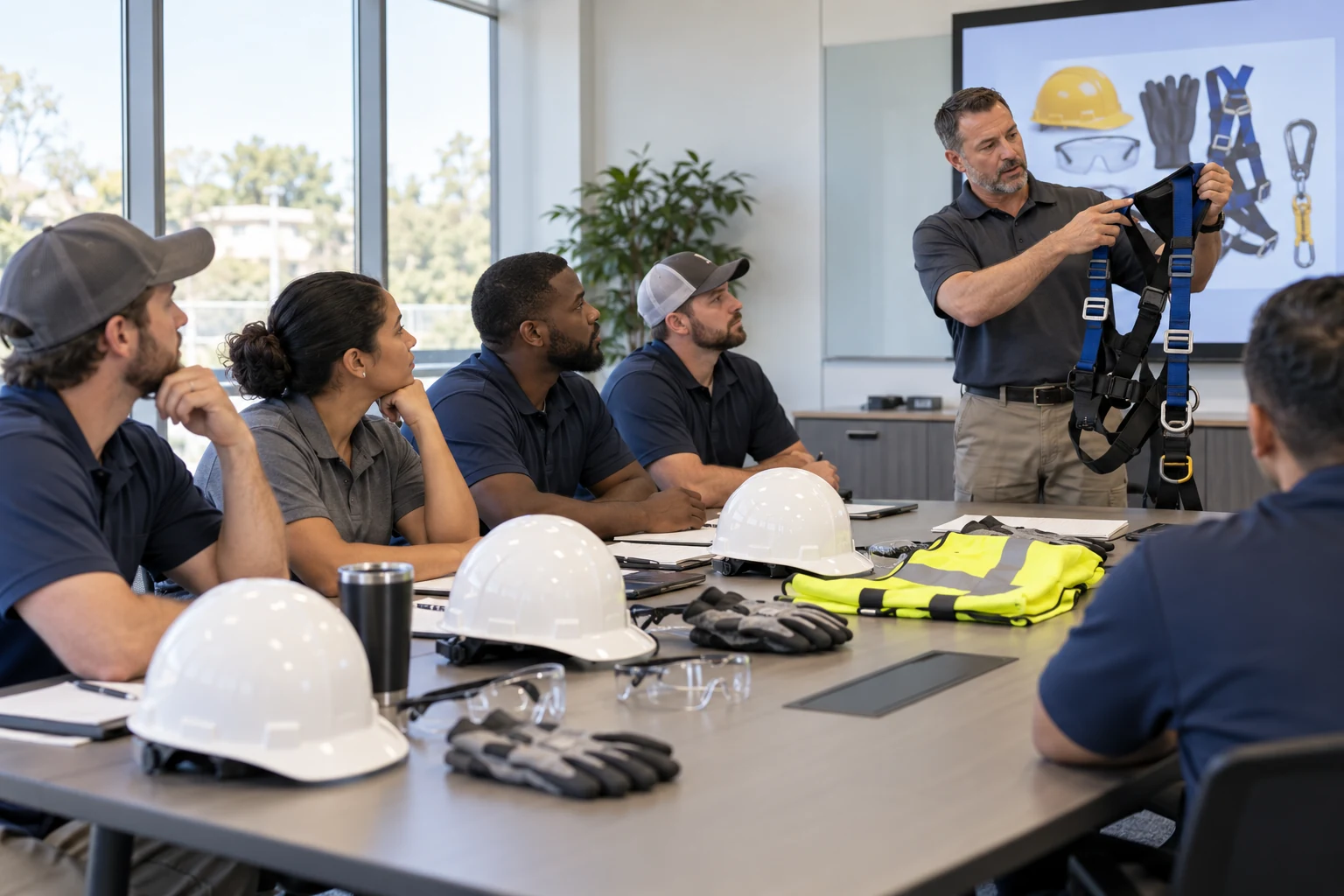
1st Key conducts safety training weekly as part of its field culture and project preparation.

Technicians participating in safety training in an office classroom
WEEKLY TRAINING

Safety is part of delivery

Technicians work in active facilities, equipment rooms, ceilings, doors and occupied public spaces. That requires preparation for the task and for the people around it.

Our weekly safety training keeps the conversation active. Before field activity, teams consider site rules, access, ladder and lift conditions, nearby trades, electrical exposure, pathways, occupied hours and how a temporary condition affects building operations.

We coordinate the work plan with the customer and document concerns that need review. Job-specific requirements depend on the site and scope; training does not replace applicable permits, inspections or owner procedures.

WHAT OUR TEAM TRAINS ON

A weekly conversation connected to real field work.

Our weekly safety program covers the topics below over time, with emphasis adjusted for current projects, seasons and lessons from the field. Role-specific instruction and site orientation supplement the weekly discussion. Awareness training is not a substitute for a required qualification, authorization or specialized certification.

Pre-task planning and stop-work decisions

Recognizing changing conditions, reviewing the day’s scope, identifying nearby trades and raising a concern before work continues.

The field discussion considers who owns the hazard, when the crew pauses, and which site-specific procedure or qualified person controls the next step.

Ladders, lifts and work at height

Ladder selection and inspection, stable setup, overhead exposure and the role-specific requirements for lifts and fall protection.

The field discussion considers who owns the hazard, when the crew pauses, and which site-specific procedure or qualified person controls the next step.

Electrical and stored-energy awareness

Recognizing energized equipment, coordinating isolation and lockout/tagout responsibilities, and respecting the limits of individual qualifications.

The field discussion considers who owns the hazard, when the crew pauses, and which site-specific procedure or qualified person controls the next step.

Tools, drilling and cable installation

Inspecting tools, controlling work areas, checking concealed-service risks and maintaining safe cable-pulling and overhead-work practices.

The field discussion considers who owns the hazard, when the crew pauses, and which site-specific procedure or qualified person controls the next step.

Personal protective equipment

Task-appropriate eye, hand, hearing and head protection; inspecting equipment and understanding where specialized protection requires additional qualification.

The field discussion considers who owns the hazard, when the crew pauses, and which site-specific procedure or qualified person controls the next step.

Occupied-building protection

Keeping exits and public routes clear, controlling trip hazards, protecting customer spaces and coordinating noise, dust and temporary barriers.

The field discussion considers who owns the hazard, when the crew pauses, and which site-specific procedure or qualified person controls the next step.

Material handling and ergonomics

Planning equipment moves, team lifts, rack work, awkward overhead tasks and repetitive work to reduce avoidable strain.

The field discussion considers who owns the hazard, when the crew pauses, and which site-specific procedure or qualified person controls the next step.

Hazard communication and material awareness

Reading labels and safety data sheets; recognizing suspect asbestos, lead and other materials and escalating before disturbing them.

The field discussion considers who owns the hazard, when the crew pauses, and which site-specific procedure or qualified person controls the next step.

Driving, backing and loading

Vehicle readiness, load security, pedestrian awareness and coordinating work near loading docks, parking areas and moving equipment.

The field discussion considers who owns the hazard, when the crew pauses, and which site-specific procedure or qualified person controls the next step.

Colorado weather and outdoor work

Heat, cold, hydration, winter walking surfaces and weather changes that affect rooftop, exterior and travel activities.

The field discussion considers who owns the hazard, when the crew pauses, and which site-specific procedure or qualified person controls the next step.

Emergency response and incident reporting

Knowing the site’s emergency contacts and assembly arrangements, promptly reporting incidents and near misses, and understanding first-aid response boundaries.

The field discussion considers who owns the hazard, when the crew pauses, and which site-specific procedure or qualified person controls the next step.

Battery, UPS and equipment-room hazards

Recognizing stored energy, battery handling concerns, restricted clearances, heat and housekeeping risks around technology equipment.

The field discussion considers who owns the hazard, when the crew pauses, and which site-specific procedure or qualified person controls the next step.

Restricted spaces and unfamiliar hazards

Recognizing confined-space or other restricted-work conditions and stopping for qualified evaluation instead of treating unfamiliar areas as routine access.

The field discussion considers who owns the hazard, when the crew pauses, and which site-specific procedure or qualified person controls the next step.

Fatigue, communication and working alone

Checking in, establishing escalation contacts and recognizing when fatigue or changing conditions call for a different work plan.

The field discussion considers who owns the hazard, when the crew pauses, and which site-specific procedure or qualified person controls the next step.

52-WEEK ROTATING CURRICULUM

One field topic each week, with a practical check.

This is a planning curriculum for weekly training, not a record that every topic was already completed. The order adapts to current work, weather and site risks. Documented attendance, qualifications and job-specific instruction are managed separately.

Weeks 1–13

WEEK 01

Pre-task planning

Review the work sequence, other trades, occupancy and the limits of the authorized scope.

Field practice: Use a short job-hazard analysis to name the highest exposure and the person who can stop work.

WEEK 02

Stop-work authority

Discuss when a new condition invalidates the work plan and how to escalate without pressure to continue.

Field practice: Rehearse a pause, site contact and documented restart decision.

WEEK 03

Customer site orientation

Find the owner’s access rules, emergency contacts, muster point, permit needs and restricted areas.

Field practice: Walk the actual route to the work before equipment is moved.

WEEK 04

Ladder inspection and setup

Match ladder type and height to the task, inspect feet and rails, and control doors and traffic.

Field practice: Demonstrate stable placement and three-point contact at a representative work area.

WEEK 05

Aerial lifts

Review operator authorization, inspection, ground conditions, overhead hazards and exclusion zones.

Field practice: Confirm the rescue plan and assigned spotter before lift use.

WEEK 06

Fall exposure and rooftops

Identify edges, skylights, openings and access transitions; review the site’s protection method.

Field practice: Mark where a task requires a qualified fall-protection plan.

WEEK 07

Electrical awareness

Recognize energized parts, damaged cords, unknown circuits and unsafe assumptions about low voltage.

Field practice: Locate the isolation point and refer work beyond individual qualifications to the responsible trade.

WEEK 08

Lockout and stored energy

Discuss who owns isolation, verification and re-energization for panels, doors, UPS and connected equipment.

Field practice: Walk through an authorized handoff without treating a software off switch as isolation.

WEEK 09

Temporary power and cords

Check ratings, protection, routing and inspection of extension cords and portable supplies.

Field practice: Remove a damaged cord and route temporary power away from occupied paths.

WEEK 10

Battery and UPS handling

Review terminals, short-circuit risk, weight, heat, leakage and disposal procedures.

Field practice: Identify the correct handling and escalation path for a suspect battery.

WEEK 11

Hand tools

Inspect cutters, drivers, blades and guards; consider hand placement and the material being worked.

Field practice: Demonstrate a stable cutting setup and safe tool storage.

WEEK 12

Power tools and drilling

Check guards, bit selection, hidden services, dust, noise and the public exclusion area.

Field practice: Use a drilling checklist before opening a wall or ceiling.

WEEK 13

Concealed utilities

Discuss how drawings, scanning and owner knowledge reduce the risk of striking pipes or energized cable.

Field practice: Pause at an unknown service and record the route change request.

Weeks 14–26

WEEK 14

Cable pulling and supports

Plan pull tension, pinch points, overhead work, supports and separation from other systems.

Field practice: Walk a proposed route and flag places that need a different method.

WEEK 15

MDF and IDF housekeeping

Maintain clearances, stable storage, ventilation and accessible exits in small equipment rooms.

Field practice: Inspect a rack area for loose materials and blocked access.

WEEK 16

Rack work and lifting

Review equipment weight, rail compatibility, tip risk and team-lift coordination.

Field practice: Plan a lift path before placing heavy equipment in a rack.

WEEK 17

Materials and ergonomics

Consider repetitive terminations, awkward reaches, overhead work and cart use.

Field practice: Break a task into positions, tool changes and team support to reduce strain.

WEEK 18

PPE selection

Match eye, hand, head, foot and hearing protection to the exposure and equipment instructions.

Field practice: Inspect the chosen PPE and identify what it does not protect against.

WEEK 19

Eye and face protection

Discuss fragments from drilling and cutting, dust and battery hazards.

Field practice: Select protection for a representative field task and check fit.

WEEK 20

Hearing protection

Identify noisy areas, tool exposure and communication needs while protection is worn.

Field practice: Check correct insertion or fit and a way to hear critical warnings.

WEEK 21

Hazard communication

Locate labels and safety data sheets for cleaners, adhesives, batteries and other site materials.

Field practice: Find the SDS for a material actually planned for use.

WEEK 22

Asbestos and lead awareness

Recognize suspect legacy materials and the limits of visual identification.

Field practice: Stop disturbance and request owner or qualified assessment before proceeding.

WEEK 23

Silica and dust control

Review drilling locations, dust capture and protection of nearby occupants and equipment.

Field practice: Plan containment and cleaning for a representative penetration.

WEEK 24

Indoor air and occupied spaces

Consider ventilation, odors, dust, noise and sensitive work areas.

Field practice: Agree on a work window and barriers with the customer contact.

WEEK 25

Slips, trips and falls

Review cords, open tiles, packaging, wet entries and winter conditions.

Field practice: Walk the public route and correct a staged trip hazard.

WEEK 26

Ceilings and overhead work

Assess tile handling, hidden equipment, falling objects and work below active rooms.

Field practice: Set the area control and tool-retention approach before opening a ceiling.

Weeks 27–39

WEEK 27

Firestopping and rated assemblies

Identify rated walls and floors and the responsibility for approved penetrations and restoration.

Field practice: Record a penetration requiring coordination before any cable is installed.

WEEK 28

Fire alarm impairments

Review notification, temporary protection, authorization and restoration responsibilities when life-safety coverage changes.

Field practice: Trace a sample impairment request through owner approval and closeout.

WEEK 29

Egress and door work

Keep exits operational and coordinate hardware, lock and alarm changes with the approved sequence.

Field practice: Check a proposed door change against the customer’s egress plan.

WEEK 30

Confined-space recognition

Identify pits, vaults and restricted areas that may require evaluation, permits or specialized training.

Field practice: Describe the stop point and qualified contact instead of entering by assumption.

WEEK 31

Utility spaces and mechanical rooms

Review heat, moving machinery, restricted clearances and owner escort requirements.

Field practice: Map a safe access route and equipment boundary.

WEEK 32

Working alone

Set check-in intervals, communication, location awareness and a missed-contact escalation.

Field practice: Test the check-in method before solitary work begins.

WEEK 33

Driving readiness

Inspect tires, lights, cargo, weather and fatigue before travel.

Field practice: Complete a departure check for the vehicle and route.

WEEK 34

Backing and parking

Control blind spots, pedestrian exposure and loading-dock conflicts.

Field practice: Choose a parking position and spotter procedure for a crowded site.

WEEK 35

Load security and transport

Secure ladders, racks, batteries and tools against shifting or falling.

Field practice: Inspect tie-down points and storage for a typical load.

WEEK 36

Winter travel and ice

Review road conditions, traction, cold exposure and schedule changes.

Field practice: Identify a safe walking and delivery route at the site.

WEEK 37

Heat, hydration and sun

Discuss exertion, acclimatization, water, shade and early symptoms of heat illness.

Field practice: Adjust an exterior work plan to available breaks and weather.

WEEK 38

Cold stress

Review wind, wet clothing, warming breaks and signs of cold injury.

Field practice: Plan layers and a warming location for rooftop work.

WEEK 39

Weather and lightning

Set decision points for storms, wind and lift or rooftop suspension.

Field practice: Identify where the team will shelter and who calls the pause.

Weeks 40–52

WEEK 40

First aid and emergency response

Know the site call procedure, AED location and the limits of each person’s training.

Field practice: Practice communicating the location and access instructions to responders.

WEEK 41

Incident and near-miss reporting

Capture facts promptly, protect the scene and separate learning from blame.

Field practice: Complete a short scenario report with condition, action and follow-up owner.

WEEK 42

Emergency evacuation

Review alarm signals, evacuation route, assembly point and accountability.

Field practice: Walk the exit route from the actual work area.

WEEK 43

Active-facility coordination

Account for visitors, patients, students, tenants or production activity around the work.

Field practice: Set a barrier and communication plan for an occupied corridor.

WEEK 44

Other-trade interfaces

Clarify who controls power, conduit, door hardware, ceiling access and inspection hold points.

Field practice: Run a coordination huddle on one shared work area.

WEEK 45

Customer data and system access

Treat credentials, camera views and network configurations as protected operational information.

Field practice: Review least-privilege access, secure transfer and end-of-job account removal.

WEEK 46

Cyber-physical handoff

Consider how a field change affects alarms, network paths, monitoring and administrator rights.

Field practice: Trace one change through owner approval, test and record updates.

WEEK 47

Test equipment and verification

Check calibration or suitability, leads, methods and the difference between a reading and an accepted result.

Field practice: Document one representative test with asset ID and exception.

WEEK 48

Quality and rework exposure

Poor labeling and unplanned repairs create avoidable repeat work at height or around energy.

Field practice: Review an example where better closeout reduced future exposure.

WEEK 49

Subcontractor and visitor coordination

Explain site rules, escort, hazard reporting and scope boundaries for people joining the work.

Field practice: Confirm who has authority to change the field plan.

WEEK 50

Fatigue and workload

Recognize long travel, extended shifts and reduced attention during repetitive tasks.

Field practice: Adjust task assignment or schedule when a safe work window has passed.

WEEK 51

Seasonal risk review

Revisit the exposures that changed with projects, weather and occupancy this quarter.

Field practice: Choose a specific corrective action from recent observations.

WEEK 52

Annual lessons and refresh

Review trends from near misses, exceptions and customer feedback without treating the list as proof of attendance.

Field practice: Update next year’s training priorities and identify role-specific qualifications to renew.

Before work starts

We coordinate with the customer on access, occupied areas, work windows and site rules. The pre-task discussion considers the route to the work, nearby electrical or mechanical equipment, other trades and the people who will continue using the facility. Work that changes a life-safety system requires a coordinated plan for the affected scope, applicable approvals and responsible parties.

When conditions change

A concealed hazard, blocked route or unexpected energized component is a reason to pause and reassess. The next step is to communicate the condition and involve the people qualified to resolve it. Schedule pressure does not make an unfamiliar hazard routine. Customers also have a role: share known hazards, building procedures and changes in occupancy or operations with the project team.

At the end of the work

Safe delivery includes restoring the work area, removing temporary trip hazards, accounting for tools and communicating any condition that remains open. Testing, system restoration and closeout responsibilities should be clear to both the field team and the customer. Concerns and near misses provide material for subsequent safety discussions.

GOVERNMENT SAFETY RESOURCES

Three useful references for facility teams.

These independent government resources support informed project conversations. They do not indicate agency endorsement of 1st Key.

Have a building in Colorado? 1st Key stands ready and able to help. Tell us the location and what needs attention; we will confirm service availability and scope.

NEXT STEP

Start with a conversation

Tell us about the facility, the existing systems and the outcome you need. We will help map a practical next step.

Request Service
Request Service