
Editorial dates are assigned for this collection; they do not represent original publication or author approval dates. The update date records this site revision.
A takeover begins with a question: what is actually installed and what responsibility can be accepted after it has been tested? A panel list or a credential export alone does not answer it. The field review should connect each opening to its controller, power, hardware, network path, users and support history.
Walk every critical opening
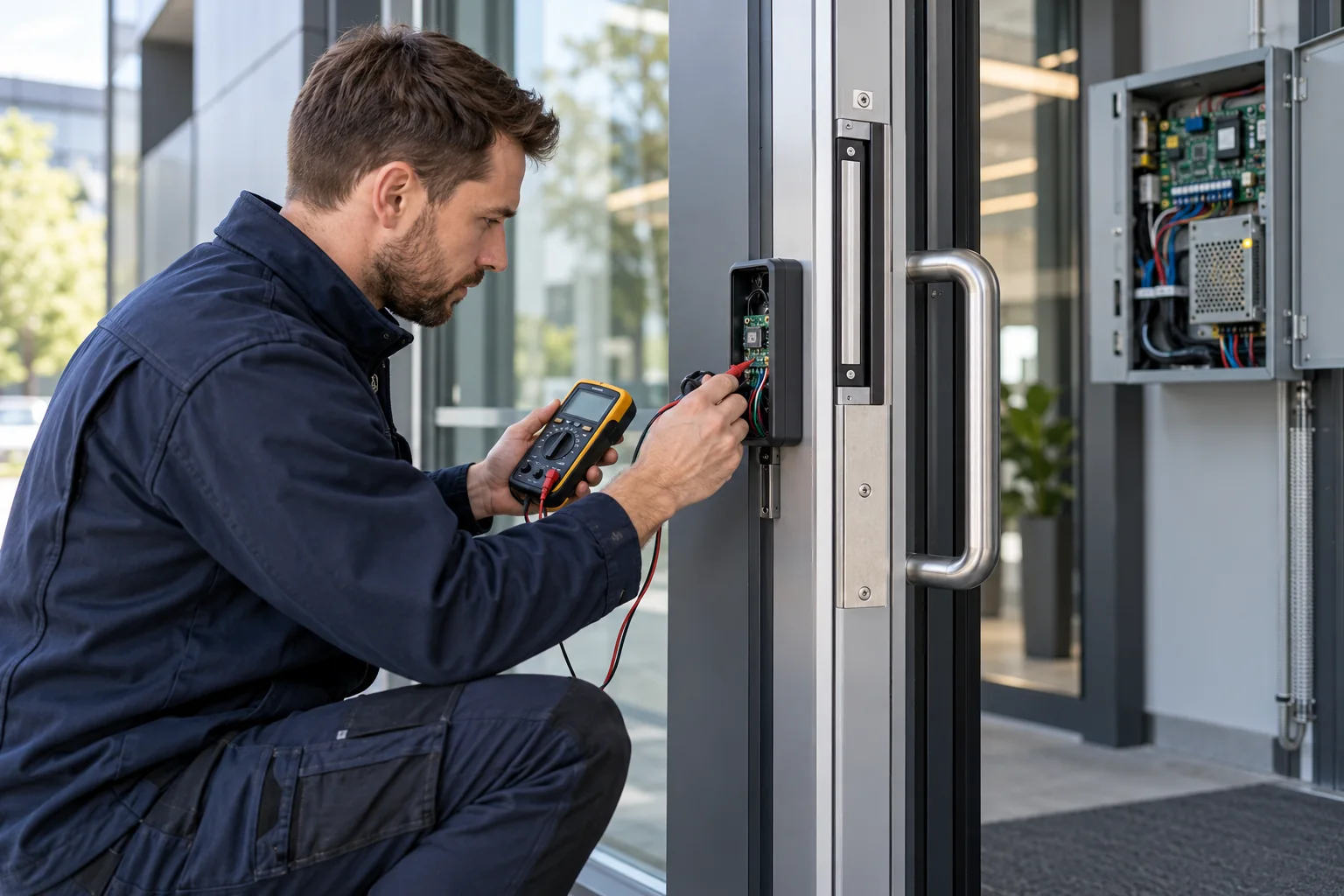
Confirm reader and credential behavior, door position, request-to-exit, lock or strike, closer, fire interface and safe egress. Record failed, inaccessible and untested conditions separately. A door that unlocks during one test can still have a held-open alarm or a power-loss behavior that needs correction.
Inspect the head end and administration
Inventory panels and power supplies; inspect labeling and battery condition. Determine who controls software administration, licenses, integrations, backups and service credentials. The customer and IT team should approve any network or remote-access changes.
Close with a deficiency path
Give the owner a device-level findings list, a repair sequence, known limits and a retest plan. A maintenance agreement can then name the equipment and tasks it covers. This method follows 1st Key’s test-and-repair-before-maintenance approach; it avoids treating unknown legacy faults as routine preventive work.
Working example: The scenario below is illustrative. It describes a practical design and review method, not a completed customer project or a guaranteed result.
A working scenario
A company inherits a legacy access platform with no current diagrams, unknown master accounts and several untested doors. Accepting full support before inventory would conceal existing faults.
The decision to make before buying
Group findings by verified, failed, inaccessible and unknown. Identify physical opening condition, power, panel, network, software rights, credentials, fire interface and current agreements.
A useful acceptance test
At selected critical doors, witness normal and exception operation with facilities and the relevant authority or trade; log any safety-related concern for specialist review.
What the owner should receive
Keep an opening register, known deficiencies, access and license transfer plan, repair order and retest results. Set support scope only after the baseline is understood.
Questions owners ask
When can an integrator responsibly accept a legacy system?
After enough of the installed environment has been inventoried and tested to define a supportable baseline. A panel database may not reflect a field-wired opening, missing battery, unknown fire connection or discontinued license. The owner should see those conditions before the maintenance scope promises coverage. Untested or inaccessible openings need their own category, not a silent “pass.”
What is the first repair priority?
Put immediate life safety and access concerns through qualified review first; next, address openings that block operations or have no reliable diagnostic path. The exact order depends on site use and approved requirements. Match each corrective item to a retest so the takeover register gradually becomes a trusted record.